System status
Updated Tuesday 9:15 a.m. by the operator on duty. This board is changed by hand every morning and again whenever anything happens.
Nothing on this board is a colour code. Every line says in words what the condition is, so it reads the same on a phone in the dark as it does on a screen in the office.

If your water is off, or it came out brown.
Do these four things in order before you telephone. Two of the four fix it without us, and the other two turn a five minute call into a thirty second one, because the operator will already know where to drive.
-
Ask a neighbour on the same road
If they have water and you do not, the problem is between the main and your house and it is very likely your side of the meter. If the whole road is out, it is ours and we probably already know. Either way it is the first thing we will ask you.
-
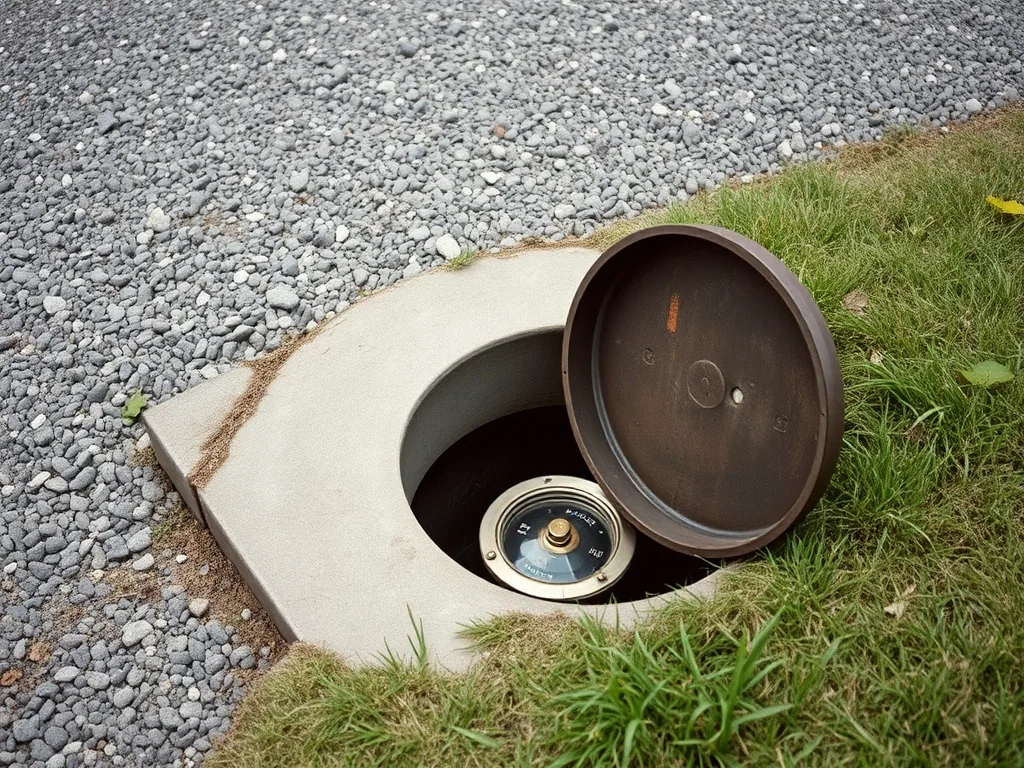
Look in the meter pit
Lift the lid. If the dial is spinning with every tap in the house shut off, you have a leak between the meter and the house, and that is yours to repair. Shut your own valve and call a plumber, not us. This single check saves people a great deal of money.
-
If it is brown, run the outside spigot, not the kitchen
Discoloured water after flushing is iron and manganese lifted off the inside of the pipe. It is unpleasant and it is not a health problem. Run the hose bib closest to the road for ten minutes, cold only, until it clears. Running an inside tap just pulls it through the water heater.
-
Then call the break line and say where you are by road
Not by address. "Half a mile north of the Route H junction on Old Stage" gets a truck moving. Tell us if you can hear water running in a ditch or see a wet patch in a field, because that is how a main break is found at night.
The rate schedule, worked through on a real bill.
Water bills are confusing because they are printed in thousands of gallons and paid in dollars, and the two numbers never appear next to each other. Here is the tariff, and then a household that used 4,000 gallons, added up line by line.
Residential tariff, effective 1 January
Everything else that can appear on a bill
A household that used 4,000 gallons
Four thousand gallons a month is about right for two people with no livestock and no garden. If yours is suddenly double that and nothing changed in the house, you have a running toilet or a leak, and the district would rather help you find it than bill you for it. Telephone the office and ask for a leak adjustment before you pay. There is a form and it is granted more often than people expect.
What the district actually is, and where it stops.
A public water supply district is not a company. It is a unit of local government, formed by petition of the landowners and by order of the circuit court, with the power to set rates and to borrow, and with an elected board answerable to the people it serves. There are no shareholders and there is no profit. Every dollar over the cost of running the system goes into pipe.
Marrowbone Creek treats its own water rather than buying it finished, which is unusual for a district this size and is why there is a plant running twelve hour shifts around the clock. Five wells feed a lime softening plant. What the district owns beyond that is 214 miles of main, seven storage structures, six booster stations and the meter in your pit.
Water quality reports are published every year by the first of July, and a copy is mailed to every household whether it is asked for or not. If you did not get yours, telephone the office and one will be posted the same week.
The boundary, in the terms the deed uses. The district takes in all of Township 57 north of the county line, the west half of Township 58, and the sections east to the Marrowbone bridge. It stops at Route DD on the south and at the river on the east. If your drive comes off Route H, Old Stage Road, Beaver Creek Road or anything between them, you are almost certainly inside it. If you are not sure, read the meter lid: ours are stamped MCPWSD.
The board meets on the second Tuesday, and you may simply turn up.
7 p.m. at the district office, 1489 SE Route H. Meetings are open under the Missouri Sunshine Law and the agenda is posted on the office door and on this page at least 24 hours ahead. You do not need permission to attend and you do not need to be on the agenda to speak during the public comment period at the start.
To get an item onto the agenda rather than into public comment, telephone the office by the Thursday before. Rate changes require a published hearing and are never voted at the meeting they are first raised in. Minutes of the last twelve meetings are kept at the office and a copy of any of them costs ten cents a page, which is what the statute allows the district to charge.